Monday, March 29, 2010

Fastest Wings on Earth Show Extremes of Sexual Selection


With feathers that resonate at precisely 1,500 hertz, the male club-winged manakin is perhaps the bird world’s most perfectly tuned example of sexual selection.

By pinning down the frequency, researchers have completed a long investigation into the bird’s sonic physiology and showed just how far some guys go to impress the ladies. According to scientists, the fundamental anatomy of the wings has been completely reworked to play a sound for courtship.

The early work focused on the anatomical peculiarities of the males’ wings. One odd middle feather has seven ridges, while an adjacent feather has an especially thick tip. A high-speed video recording of males making their trademark sounds showed they shake their wings 107 times per second. That’s faster than a hummingbird’s wingbeats, and faster than was even thought to be possible in a vertebrate.

The sound was replicated by putting feathers inside an apparatus that measured their acoustic resonance at high-speed vibrations. At 1,500 vibrations per second, and not a few more or less, the feathers’ resonance swelled.

That number is predicted by the feathers: seven ridge bumps, multiplied by two — the upstroke and downstroke — multiplied by 107 wingbeats per second equals a frequency of 1498 hertz, almost exactly what they measured in the lab.


Original article here.

Elephants Run Like No Other

A biomechanical analysis of running elephants has revealed that Earth’s largest land animals do some strange things at high speed.

Unlike every other quadruped, they use all four legs for braking and propulsion, rather than rather dividing those tasks between hind and front legs.

Elephants also prove to be extremely inefficient while running. Compared to animals like horses, they perform quite poorly.

Scientists videotaped six Asian elephants as they ran across mechanical plates that measured the force of each stride. By combining gait models distilled from the video with force measurements, they could quantify the elephants’ biomechanics.

Surprisingly, they learned that braking and propulsion is performed equally by each leg. In other quadrupeds, rear legs are mostly used to push off, and front legs to slow down. The elephants’ arrangement likely makes them more stable and reduces physical stress placed on each leg.

Original article here.

Tuesday, March 16, 2010

Monkey Walks Upright

A 5 year-old monkey in a zoo in Jerusalem has astonished zookeepers by walking upright:

Thursday, March 11, 2010

All-Black Penguin Discovered


The above melanistic penguin was discovered at Fortuna Bay on the subantarctic island of South Georgia.

Melanism is merely the dark pigmentation of skin, fur--or in this case, feathers. The unique trait derives from increased melanin in the body. Genes may play a role, but so might other factors. While melanism is common in many different animal species, the trait is extremely rare in penguins. All-black penguins are so rare there is practically no research on the subject--biologists guess that perhaps one in every quarter million of penguins shows evidence of at least partial melanism, whereas the penguin above appears to be almost entirely melanistic.

The penguin did not appear to exhibit different behavior than that of his fellow penguins, and he seemed to mix well with them.

Original article here.

Sunday, March 07, 2010

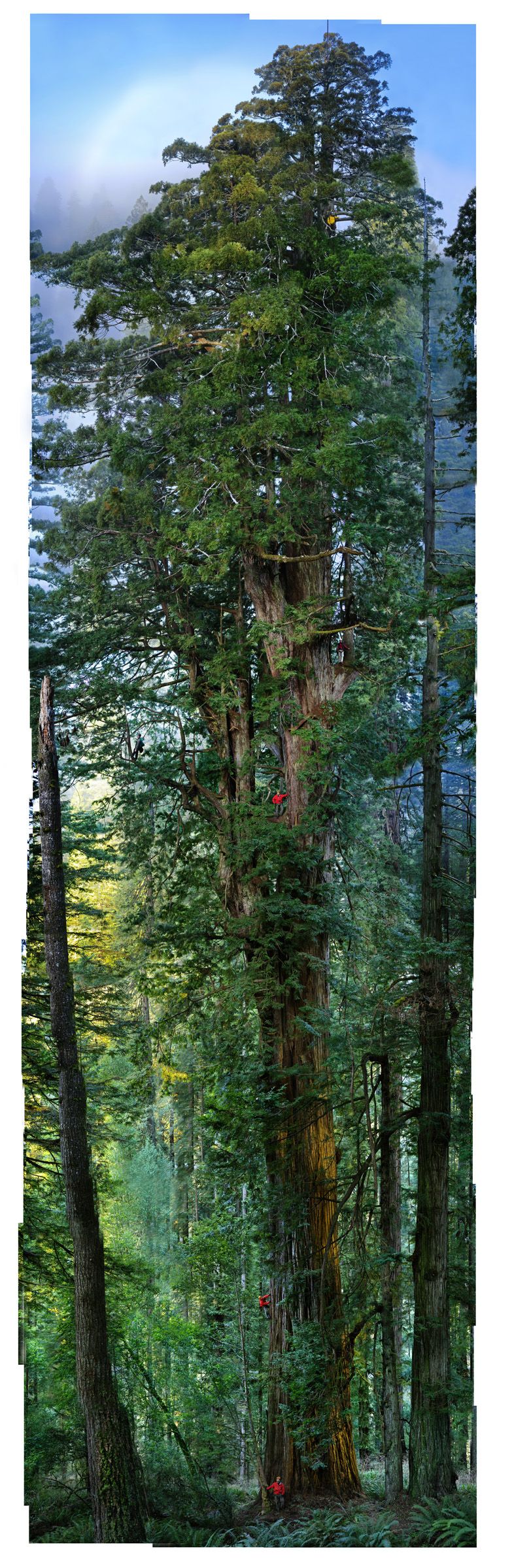
Redwood Perspective

Click on the below image to see a size perspective of a giant redwood. Be sure to click again on the image to zoom out (your browser will likely shrink it initially to fit the screen).

Saturday, February 27, 2010

Baby Anteater


Taken from here.

Wednesday, February 24, 2010

Where There's a Will, There's a Way!


Original post here.

Sunday, February 21, 2010

Collection of Science Photos

Below are several examples from this interesting collection of science photos:

Human tongue:
A high energy beam scanner, called a scanning electron micrograph, was used to capture this image, which shows the surface of a human tongue. The protruding objects, called filiform papillae, can sense pressure. The flaky appearance of the papillae results from the fact that they are constantly shedding their skin to increase sensitivity.


Blood clot:
This electron micrograph of a blood clot shows an exceptional level of detail, part of the Wellcome Images collection. For this image, the photograph was enhanced to show detail and color, but in the center of the image, there is a clearly identifiable white blood cell surrounded by a blood clot.


Green Sea Slug:
This green sea slug – found on the East coast of the US and Canada -- has an interesting ability: It can synthesize the green pigment chemical chlorophyll like a plant.


Pond Scum:
Researchers are discovering some amazing creatures in the pond scum. In this photo, the single-celled Plagiopyla looks like a smiling face or Easter Island statues.


Weaver Ants:
Weaver ants (Oecophylla sp.) put the finishing touches on their nests in Buton Island, off the southeast peninsula of Sulawesi, Indonesia. As their name implies, they use living plants to "weave" leaves together to construct their nests, which they vigorously protect. Silk produced only by the larvae helps hold the nest together.


To see and read more, see the original article here.

Saturday, February 20, 2010

10 animals with the longest life spans

The creatures featured below are from a list of the 10 longest living animals:

10. Geoducks

First on the list are these large saltwater clams that are native to the Puget Sound and have been known to live for at least 160 years. They are characterized by their long 'necks', or siphons, which can grow to over 1 meter long.


9. Tuataras

The word "dinosaur" is commonly used to describe an old person, but when it refers to a tuataras, the term is as literal as it is metaphorical. The two species of tuatara alive today are the only surviving members of an order which flourished about 200 million years ago — they are living dinosaurs. They are also among the longest-lived vertebrates on Earth, with some individuals living for anywhere between 100 and 200 years.


8. Lamellibrachia tube worms

These colorful deep sea creatures are tube worms (L. luymesi) that live along hydrocarbon vents on the ocean floor. They have been known to live 170 years, but many scientists believe there may be some that have lived for more than 250 years.


7. Red sea urchins

The red sea urchin or Strongylocentrotus franciscanus is found only in the Pacific Ocean, primarily along the West Coast of North America. It lives in shallow, sometimes rocky, waters from the low-tide line down to to 90 meters, but they stay out of extremely wavy areas. They crawl along the ocean floor using their spines as stilts. If you discover one, remember to respect your elders — some specimens are more than 200 years old.


6. Bowhead whales

Also known as the Arctic whale, the bowhead is by far the longest living mammal on Earth. Some bowhead whales have been found with the tips of ivory spears still lodged in their flesh from failed attempts by whalers 200 years ago. The oldest known bowhead whale was at least 211 years old.


5. Koi

Koi are an ornamental, domesticated variety of the common carp. The are common in artificial rock pools and decorative ponds. Amazingly, some varieties are capable of living more than 200 years. The oldest known koi was Hanako, a fish that died at the age of 226 on July 7, 1977.


4. Tortoises

Tortoises are considered the longest living vertebrates on Earth. One of their oldest known representatives was Harriet, a Galápagos tortoise that died of heart failure at the age of 175 years in June 2006 at a zoo owned by the late Steve Irwin. Harriet was considered the last living representative of Darwin's epic voyage on the HMS Beagle. An Aldabra giant tortoise named Adwaita died at the rumored age of 250 in March 2006.


3. Ocean quahog

The ocean quahog (Arctica islandica) is a species of clam that is exploited commercially. Researchers have interpreted the dark concentric rings or bands on the shell as annual marks, much like a tree has rings. Some collected specimens have been calculated to be more than 400 years old.


2. Antarctic sponge

Perhaps due to the extremely low temperatures of the Antarctic Ocean, this immobile creature has an extremely slow growth rate. Some estimate the oldest known specimens are 1,550 years old.


1. Turritopsis nutricula jellyfish

This species of jellyfish might be the only animal in the world to have truly discovered the fountain of youth. Since it is capable of cycling from a mature adult stage to an immature polyp stage and back again, there may be no natural limit to its life span. Because they are able to bypass death, the number of individuals is spiking. "We are looking at a worldwide silent invasion," says Dr. Maria Miglietta of the Smithsonian Tropical Marine Institute.


Original article here.

Monday, February 15, 2010

Monkeying Around

Below are several pictures from this article depicting the "graceful dance" of primates. In order, the species are Hanuman Langurs, Verreaux's Sifakas, and Geladas.